For global pharmaceutical executives watching China, the conversation is decisively shifting.
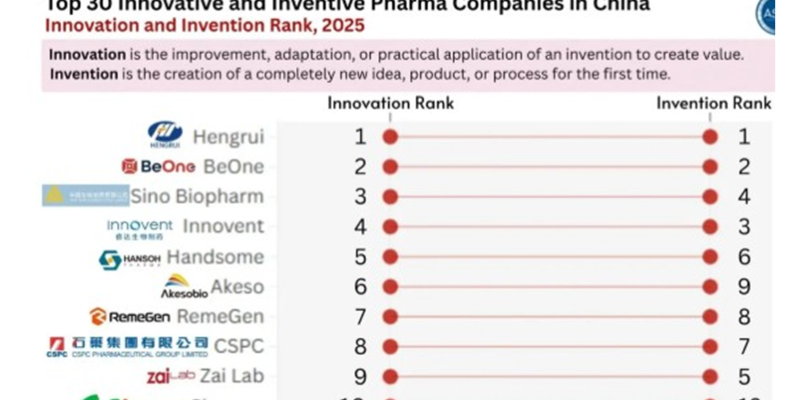
A look at the 2025 rankings of China’s most innovative and inventive pharma companies offers less of a simple scorecard and more of a strategic map.
At a glance, a clear leader emerges :
➡️ Hengrui Pharmaceuticals holds the top position in both the innovation and invention rankings, establishing itself as a fully integrated, R&D-driven powerhouse. However, perhaps the more compelling story lies in the strategic diversity of the companies that follow.
➡️Firms like Innovent Biologics and Zai Lab demonstrating formidable strength in invention—a proxy for robust early-stage pipelines and intellectual property.
➡️Others, sometimes referred to as “commercial accelerators,” excel at navigating complex clinical and regulatory pathways to bring novel therapies to one of the world’s most dynamic markets.
✨ The data point that half of the 2024 novel drug approvals from these top 30 companies were biologics underscores that this race is firmly centered on advanced therapeutics.
✨From a neutral perspective, this specialization signals a maturation of the ecosystem. China’s innovative pharma sector is not a monolithic challenger but a segmented network of specialists, integrators, and commercial experts.
✨For multinational corporations (MNCs), this environment suggests that blanket strategies for China may be less effective than targeted, model-specific engagements.
✨The opportunity lies not merely in viewing these companies as competitors but in identifying where their specialized capabilities—be it in discovery biology, rapid clinical trial execution, or nuanced commercial access, can complement global portfolios.
This evolution prompts a critical question for international pharma leaders:
As China’s innovators continue to build deep, specialized expertise in areas like oncology and immunology, could the most strategic path forward shift from a traditional market-entry model to one of “capability access,” where partnerships are formed not just for distribution but to tap into distinct pools of R&D velocity or commercial agility that are now concentrated in this ecosystem?
The landscape suggests that the future of global drug development may increasingly hinge on identifying and integrating these specialized, geographically anchored strengths.